Collection: Hand Block Printed Kota Doria Dupatta

7 products

Collapsible content

Hand Block Printed Kota Doria Dupatta

The Kota Doria Dupatta That Every Wardrobe Actually Needs

There are fabrics that exist in fashion conversation without most people really knowing what makes them special. Kota Doria is not one of them. Once a woman wears a genuine kota doria dupatta, she understands immediately. The fabric is unlike anything else. It is weightless, it breathes, it catches light in that particular way only a woven check structure can, and it drapes without effort.

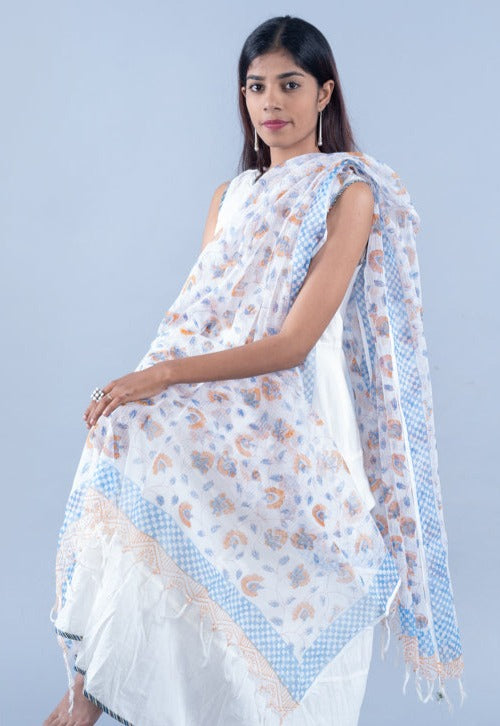
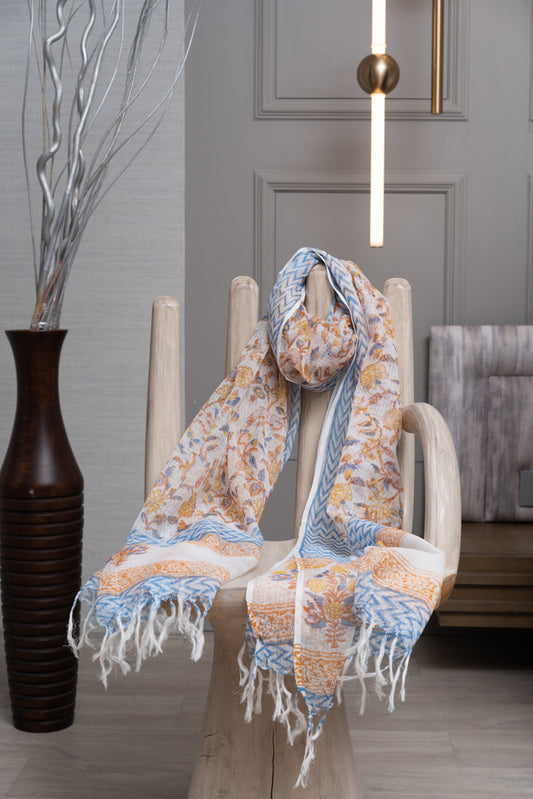
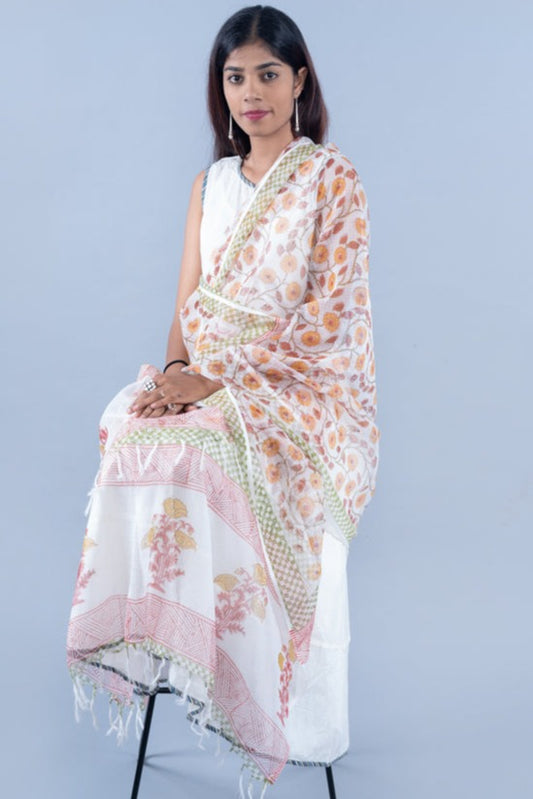
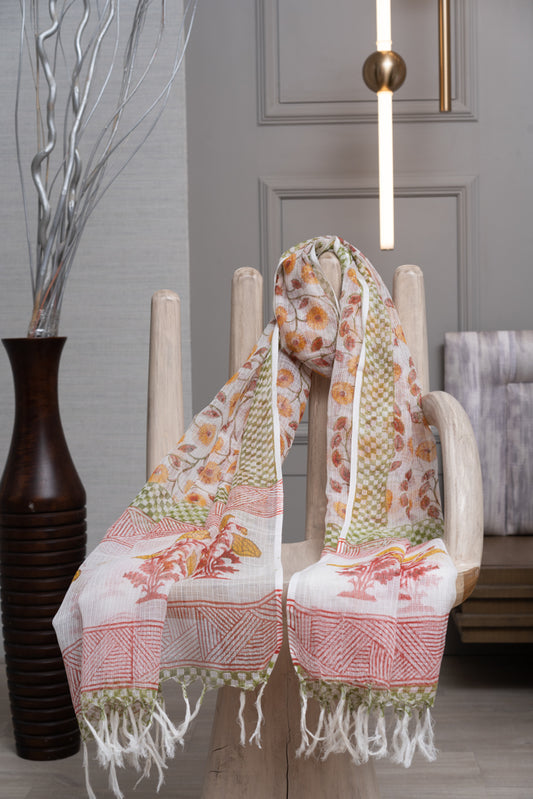
OMVAI's Kota Doriya collection brings together all hand block printed kota doria dupattas for women, each one built on an ivory white base and printed with one of two classical Indian print traditions, Jaal and Buta, in four carefully chosen accent colours. 

If you have been looking for a kota doria dupatta that honours the fabric properly and carries genuine handcraft, this collection is where to start.

What Is Kota Doria Fabric and Why Does It Matter?

Kota Doria, also written as Kota Doriya, is a GI-tagged (Geographical Indication) textile that originates from Kaithoon town in Kota, Rajasthan. The fabric has been woven in this region for over three centuries and carries a protected designation, meaning authentic Kota Doria can only be produced in its place of origin.

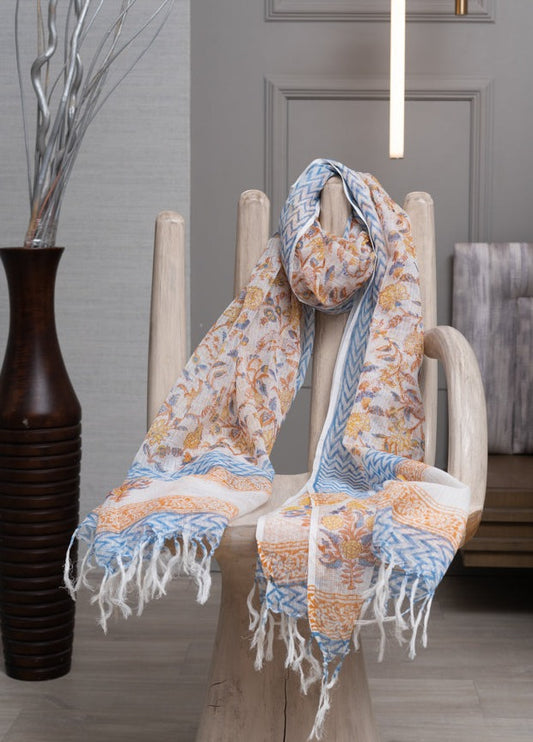
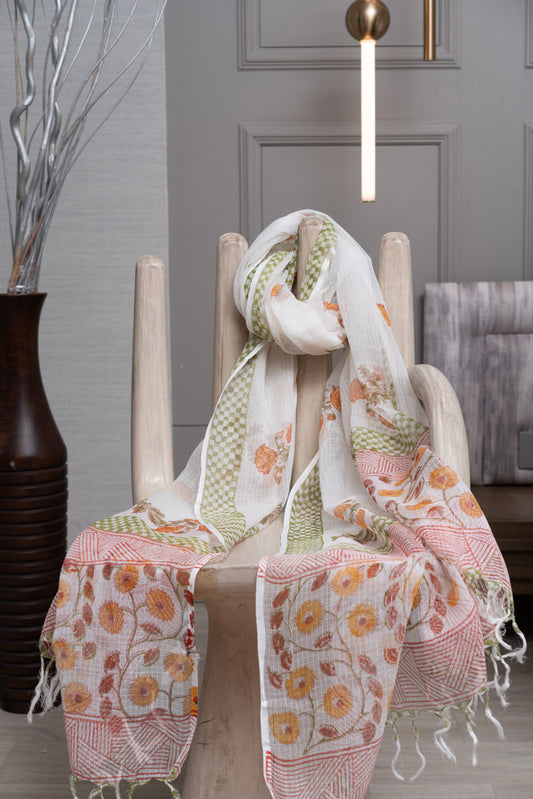
What makes the fabric immediately recognisable is its distinctive square check weave, called the khat pattern, created by interlacing fine cotton and silk yarns together on a traditional handloom. This interlacing is what gives Kota Doria its characteristic light transparency and subtle sheen. The checks appear as small windows in the fabric, allowing air to pass through freely, which is why a kota doria dupatta for women has always been the preferred choice through the hottest months of the year.

The fabric is soft but not fragile. It holds its shape without stiffness, drapes without clinging, and makes hand block printing an ideal surface treatment because the slightly open weave absorbs natural dyes beautifully. A genuine Kota Doria piece is both a textile and a craft statement.

Hand Block Printing on Kota Doria: What the Process Actually Involves

Block printing on Kota Doria is a more skilled process than block printing on plain cotton or linen. The open weave structure of the fabric means the printer must apply consistent, controlled pressure to transfer the design without bleeding or distortion. Each design is carved into a wooden block by hand, and the printer stamps each repeat by eye, aligning the pattern across the full length of the dupatta.

In OMVAI's collection, every dupatta has been printed using this traditional hand block method. The result is a print that has slight, natural variation from repeat to repeat, a quality that distinguishes genuine hand block printing from machine screen printing. If you look closely at the fabric, you will see that no two printed flowers are perfectly identical. That is not an imperfection. That is the point.

All Designs Built Around Two Classical Print Traditions

All dupattas in this collection are white-based with printed motifs. The designs are organised around two of the most important motifs in Indian block printing, Jaal and Buta, each available across multiple colour combinations.

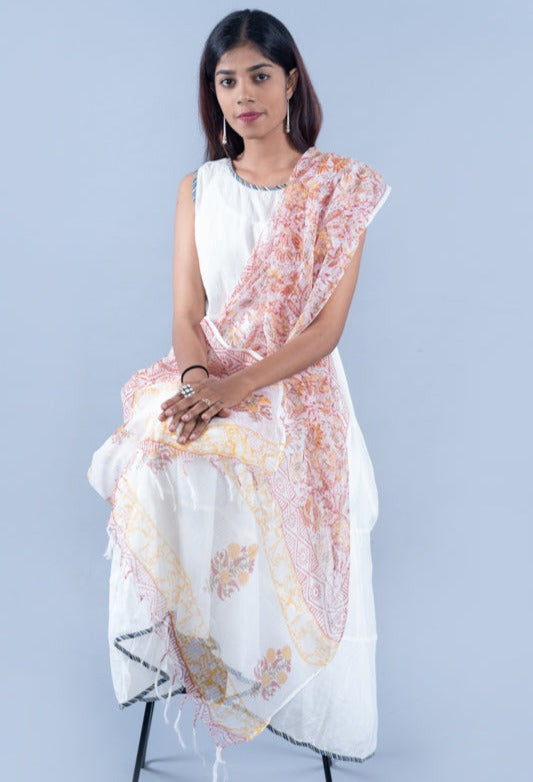
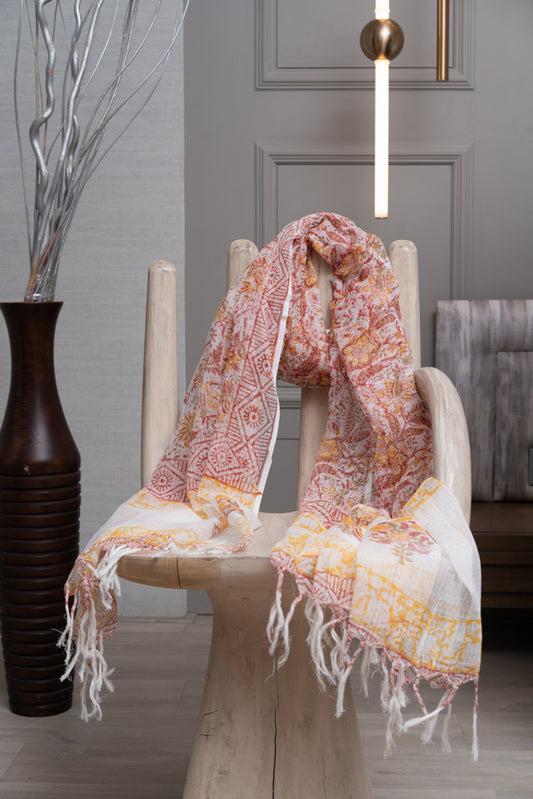
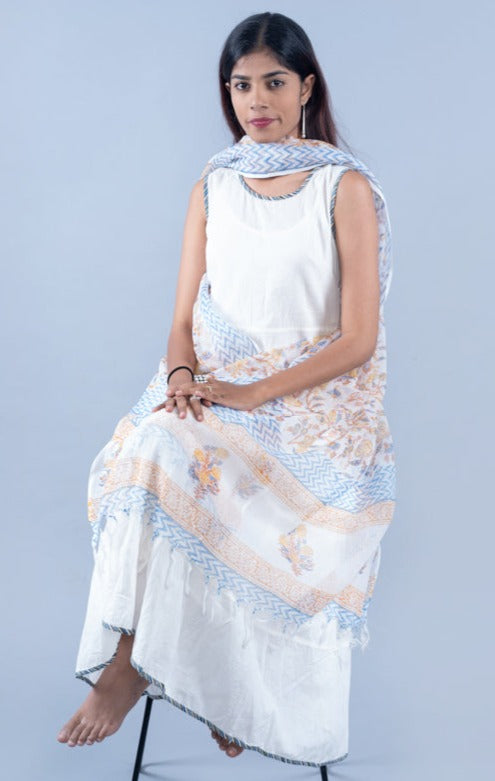
Jaal Designs (Flowing Lattice Pattern) Jaal refers to a continuous net or lattice pattern where floral elements repeat across the full surface of the fabric in an interlocking grid. It is an immersive print that covers the dupatta end to end, giving maximum visual impact. OMVAI offers three Jaal designs in this collection: White with Red Flower Jaal, White with Blue Flower Jaal, and White with Blue Ornamental Flower Jaal. The Red Jaal is bold and festive; the two Blue variations differ in the complexity of the floral ornament.

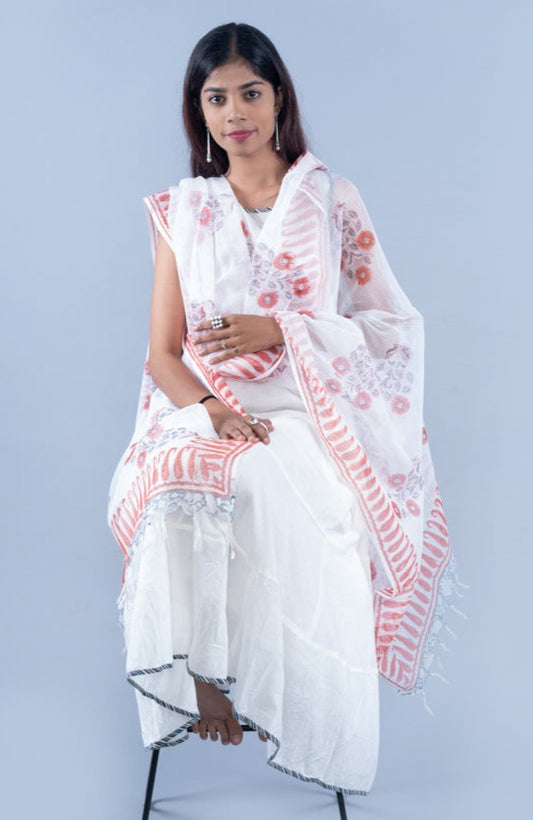
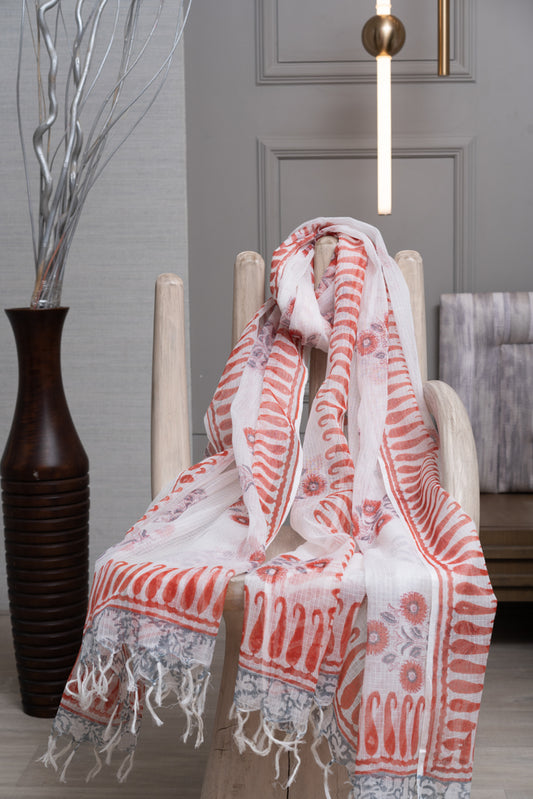
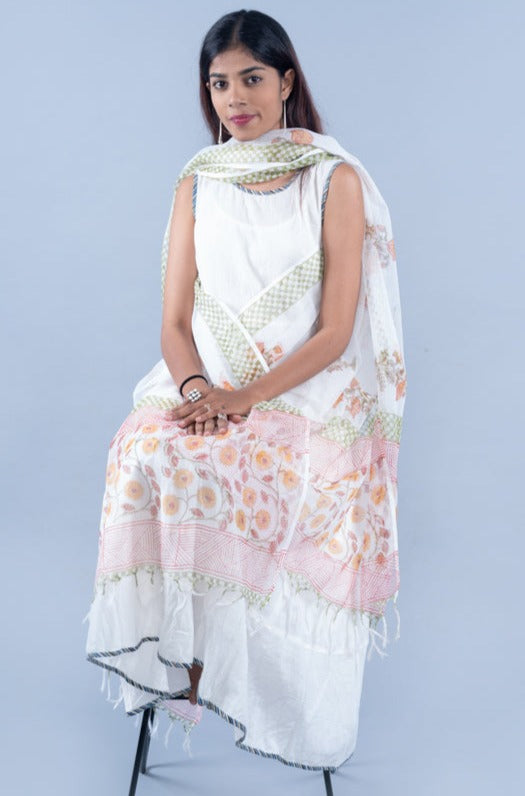
Buta Designs (Individual Motif Sprigs) Buta refers to individual floral or botanical motifs placed at regular intervals across the fabric, creating a spaced, considered pattern rather than a continuous fill. The ground shows between each motif, making Buta dupattas feel airier and slightly more understated than Jaal versions while still being richly printed. OMVAI offers four Buta designs here: White with Coral Flower Buta, White with Coral Ornamental Flower Buta, White with Red Daffodil Buta, and White with Yellow Ornamental Sun Flower Buta.

Colour Overview Red and Coral prints are the warm, festive options that pair naturally with deep or neutral base outfits. Blue prints are versatile year-round and work across both ethnic and contemporary styling. Yellow is the rarest and most distinctive, with the Ornamental Sun Flower Buta standing out as a warm, celebratory print that is harder to find in most kota doria dupatta collections.

How to Wear a Kota Doria Dupatta for Women

The transparency and lightness of Kota Doria means it works differently on the body compared to heavier dupattas. A few approaches that make the most of the fabric:

Draped loosely over the shoulders with a plain white or ivory salwar kurta, the print does all the work while the fabric stays cool and comfortable. Pinned at one shoulder in a saree-style drape over a straight kurta, it adds formality and movement. Worn as a single-layer stole across a western dress or jumpsuit, it bridges ethnic and contemporary styling effectively. Because the fabric is so light, it travels extremely well and is ideal for occasions where you want to look dressed up without carrying the weight of heavier textiles.

Why OMVAI's Kota Doria Collection Is Worth Trusting

The kota doria dupatta market online is full of machine-printed imitations that use the name without the craft. The difference between genuine hand block printing on authentic Kota Doria and a digital print on lookalike fabric is visible and tactile. OMVAI sources its Kota Doria from the craft tradition it belongs to and prints using hand blocks in the classical method.

All dupattas are available in stock with free shipping across India, COD on all orders, and an express delivery option for those who need a quick turnaround before an event or occasion.

FAQs

Kota Doria (also spelled Kota Doriya) is a GI-tagged handloom fabric from Kota, Rajasthan. It is woven on a traditional handloom by interlacing cotton and silk yarns in a distinctive square check structure called the khat. The result is an exceptionally lightweight, semi-transparent fabric with a natural sheen that is breathable, soft, and ideal for warm climates. It has been produced in the Kota region for over three centuries and is one of India's most celebrated textile traditions.
Jaal is a continuous lattice or net pattern where the design repeats across the entire surface of the fabric without gaps, creating a fully covered print. Buta is a sprig or individual motif pattern where distinct floral or botanical elements are placed at intervals across the fabric, with the base fabric showing between each motif. Both are classical Indian block printing traditions. Jaal dupattas tend to feel bolder and more festive; Buta dupattas feel lighter and more versatile.
Yes. All seven dupattas in OMVAI's Kota Doriya collection are hand block printed using wooden blocks carved with individual motif designs. Each design repeat is stamped by hand, which results in slight natural variation from repeat to repeat that distinguishes genuine hand block printing from machine printing.
For festive occasions and ethnic wear, Red and Coral prints are the most popular choices. Blue prints are the most versatile and work well across both ethnic and western outfits throughout the year. Yellow, specifically the Ornamental Sun Flower Buta design, is the most distinctive option in the collection and works particularly well for spring-summer occasions and daytime events.
Gentle hand washing in cold water with mild detergent is recommended. Because Kota Doria is a delicate woven fabric, avoid soaking or wringing. Rinse gently and dry flat in shade. Iron on low heat from the reverse side while slightly damp for the best results. Avoid machine washing as it can distort the check weave structure.
Kota Doria is primarily a summer fabric due to its lightweight, breathable check weave that allows air circulation. It is best suited to spring and summer months, or in air-conditioned environments during warmer seasons. In cooler months, it can be layered but is not a substitute for heavier winter dupattas or stoles.