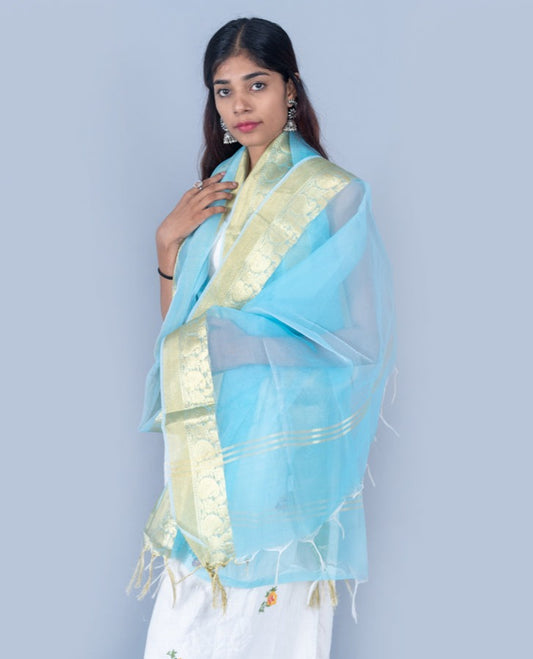
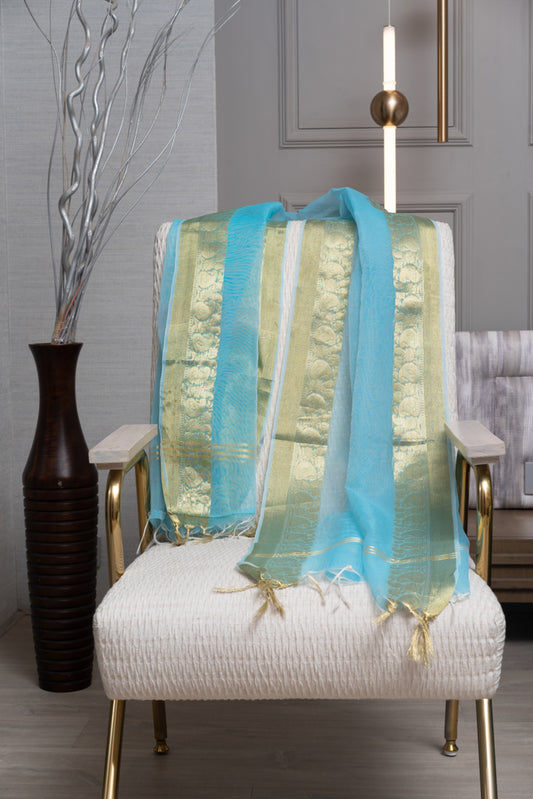
Collection: Golden Border Chanderi Silk Dupatta

9 products

Collapsible content

Golden Border Chanderi Silk Dupatta

The Chanderi Dupatta That Understands What Festive Dressing Actually Needs

There is a particular kind of elegance that comes from wearing the right fabric at the right moment. Chanderi silk has been that fabric for generations of Indian women. It has the weight of something precious without the heaviness of something overdone. It catches light without shouting for it. And when it carries a golden border, it speaks the language of celebration fluently.

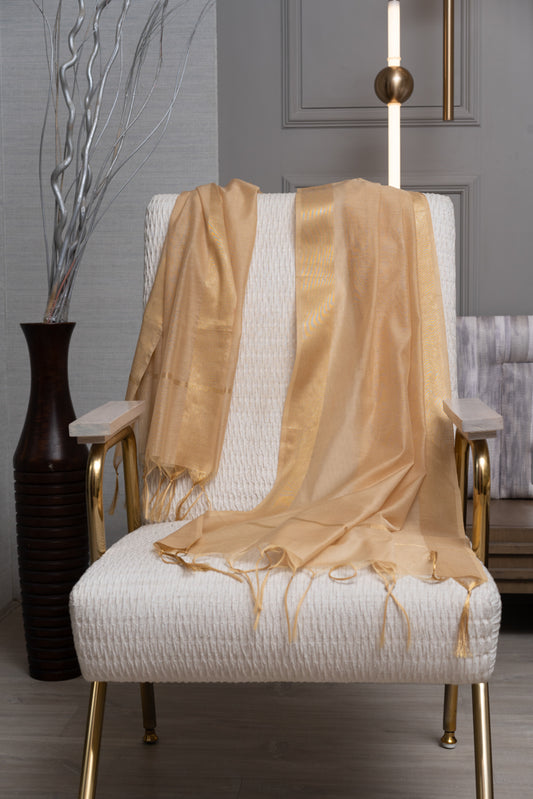
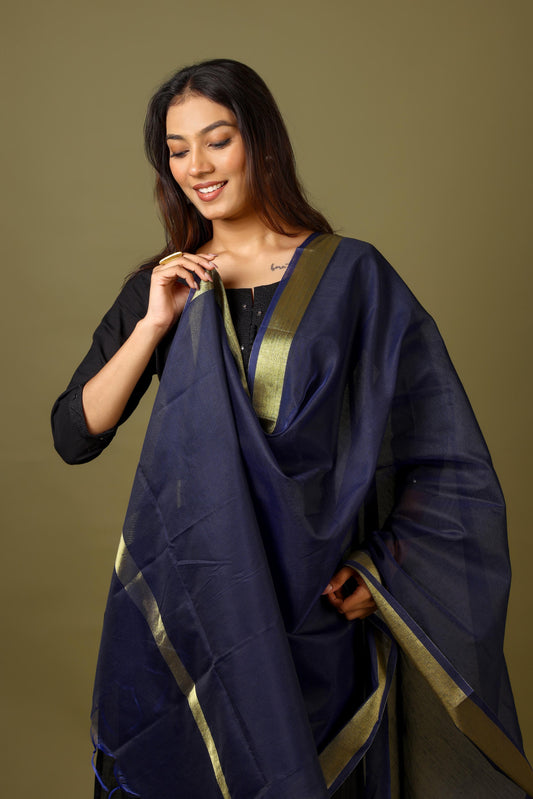
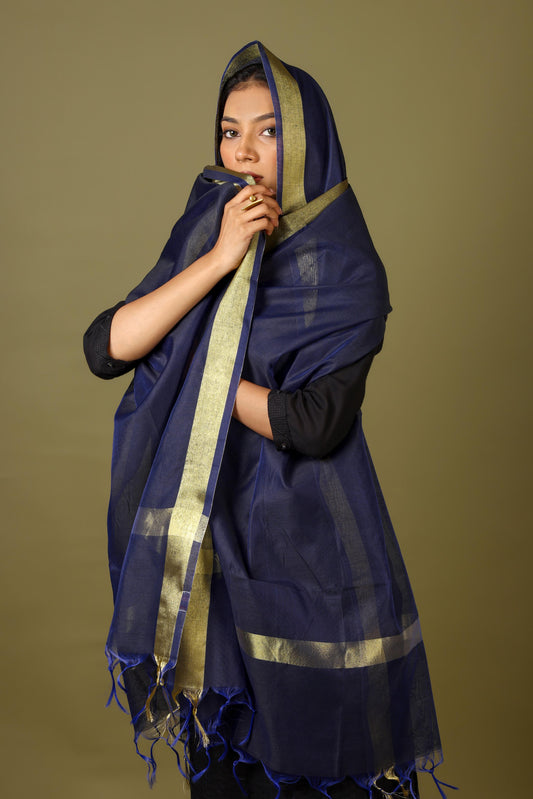
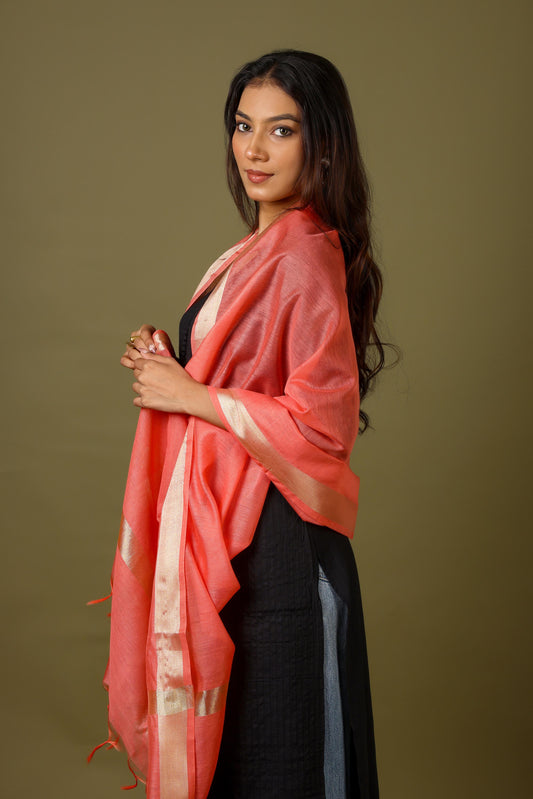
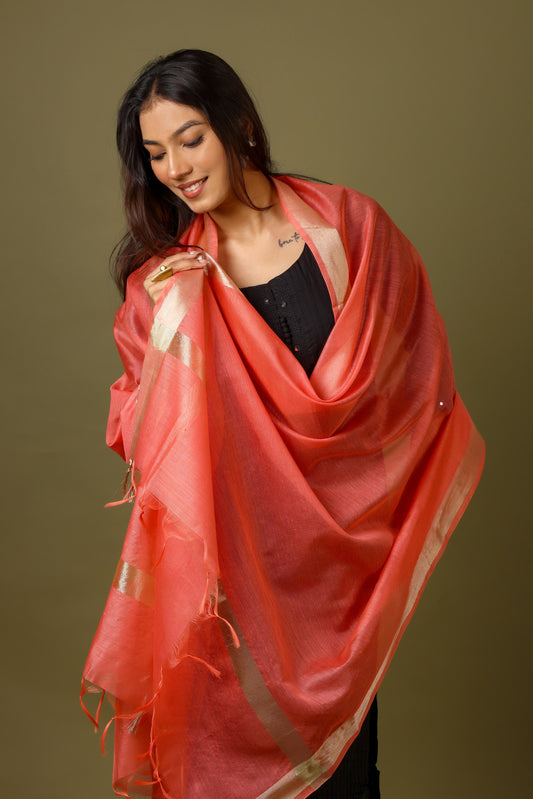
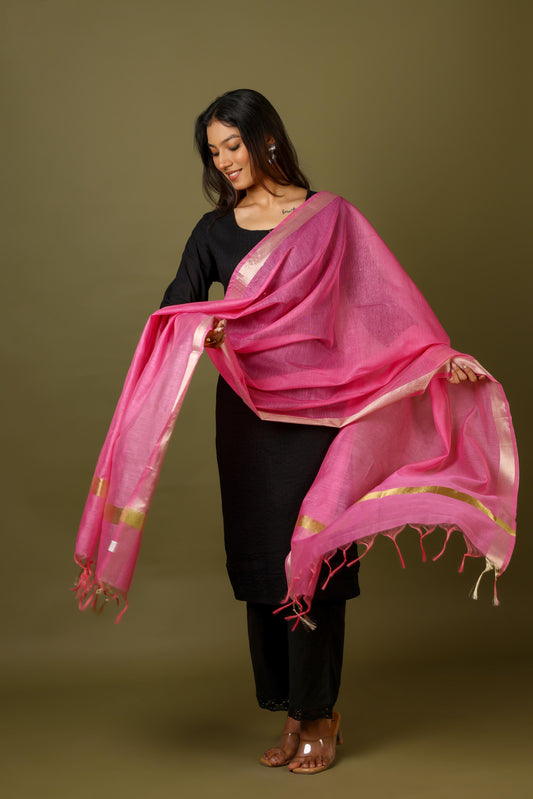
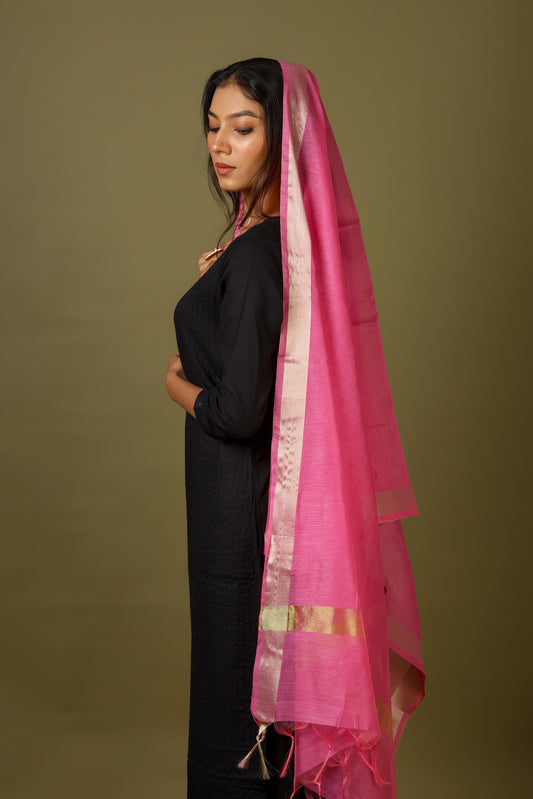
OMVAI's Golden Border Chanderi Silk Dupatta collection brings together all beautifully coloured Chanderi dupatta options for women, each featuring a woven golden border that frames the fabric the way a painting needs its frame.

What Chanderi Silk Is and Why It Has Endured for Centuries

Chanderi is a small town in Madhya Pradesh that has given its name to one of India's most celebrated GI-tagged handloom fabrics. The Chanderi weaving tradition stretches back over six centuries, with artisans in the region producing silk and cotton textiles that were historically worn by royalty and nobility. The GI tag (Geographical Indication) that Chanderi fabric now carries means that only fabric woven authentically in this region can carry the Chanderi name.

Chanderi Silk is a blend of silk and cotton yarns woven together on a handloom. The silk content gives the fabric its characteristic natural sheen and soft lustre. The cotton content adds structure and prevents the fabric from being too delicate or slippery. The result is a fabric that is lightweight, semi-transparent, and has a gentle crispness that allows it to hold its drape cleanly without collapsing.

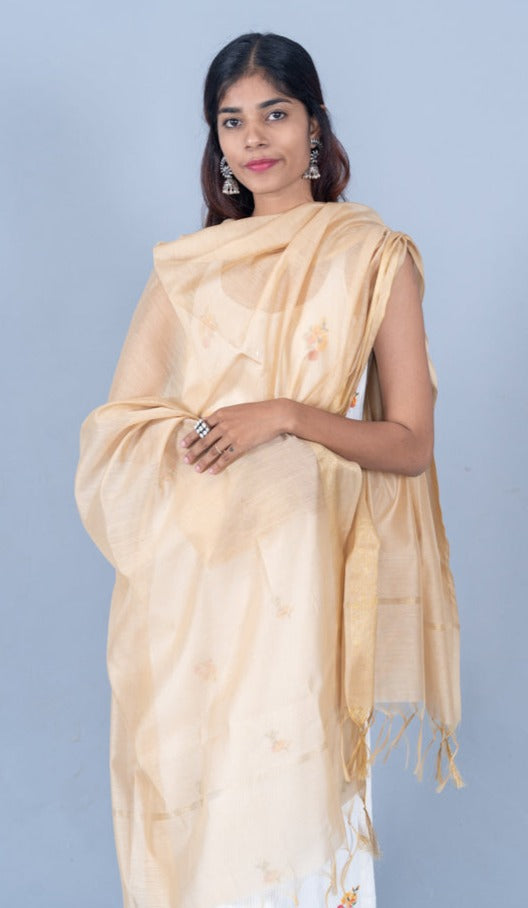
For a chanderi dupatta for women, these qualities matter enormously. The fabric sits cleanly over an outfit without shifting or bunching. The sheen catches evening light in a way that makes it look richly dressed without being theatrical. And the lightness means it can be worn through warm seasons without the discomfort of heavier festive fabrics.

The Golden Border: A Design Decision With Roots in Tradition

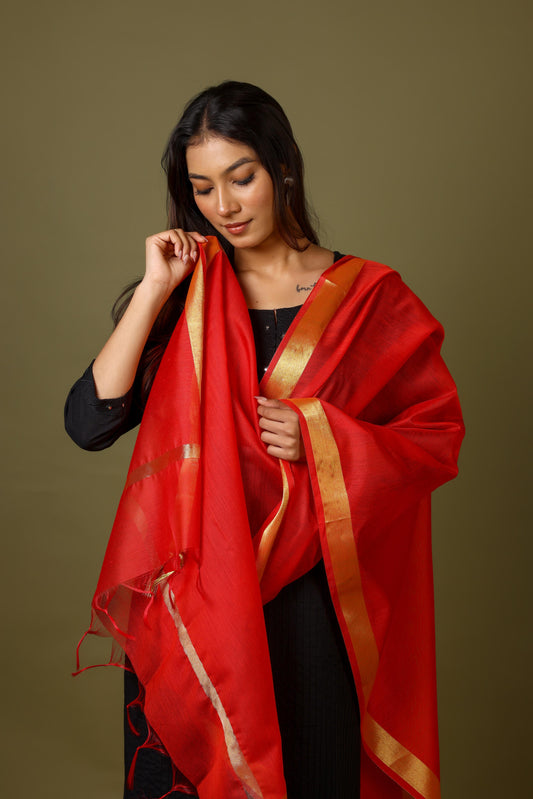
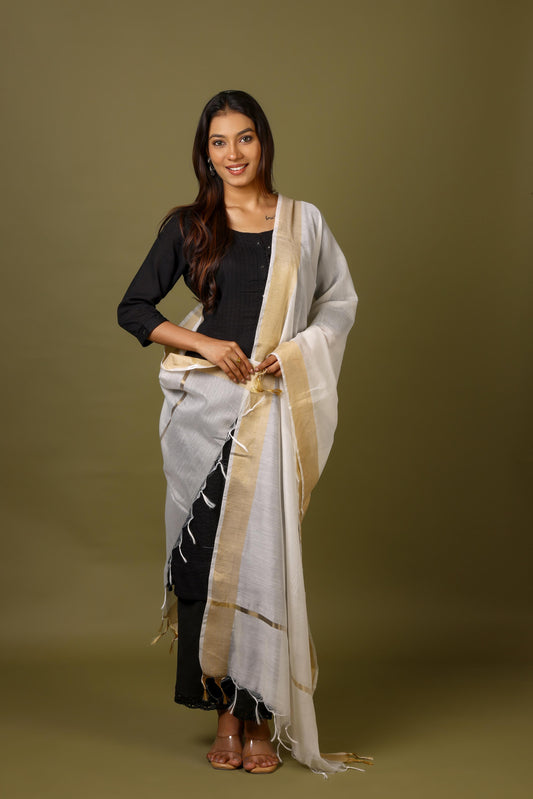
The defining feature of this entire collection is the golden border that runs along the length of each dupatta. This kind of border in traditional Indian textiles is typically woven using zari, a fine metallic thread made from silver or gold-toned material that is woven directly into the fabric rather than added as embroidery afterwards.

A woven golden border is fundamentally different from a printed or embroidered one. It is integrated into the structure of the fabric, which means it does not peel, fade, or separate from the base cloth with use and washing. The border appears as part of the dupatta itself, not as decoration applied on top.

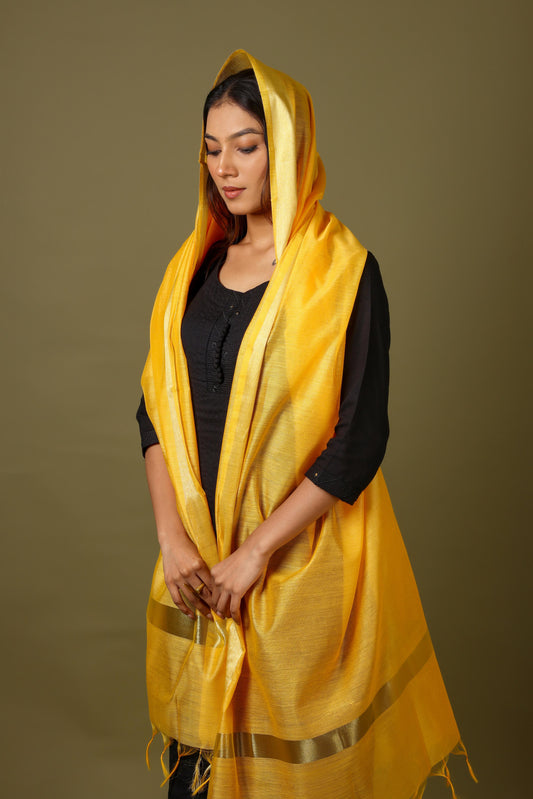
On Chanderi Silk, a golden border creates a specific visual effect. The silk sheen of the fabric base and the metallic quality of the border reinforce each other. In natural light, the combination reads as warm and quietly luxurious. In indoor lighting, it brightens the entire piece. This is one of the reasons a Chanderi dupatta with a golden border has been a staple of Indian festive dressing for so long. It does not need to work hard to look special.

One piece in the collection, the Firoza Turquoise Blue variant, features a Paisley border instead of the standard golden border, adding an additional decorative dimension to what is already one of the more distinctive colours in the range.

Dupattas Colours Built for Every Occasion in Your Calendar

The colour range in this collection is broad enough to cover your full festive and occasion calendar without repetition.

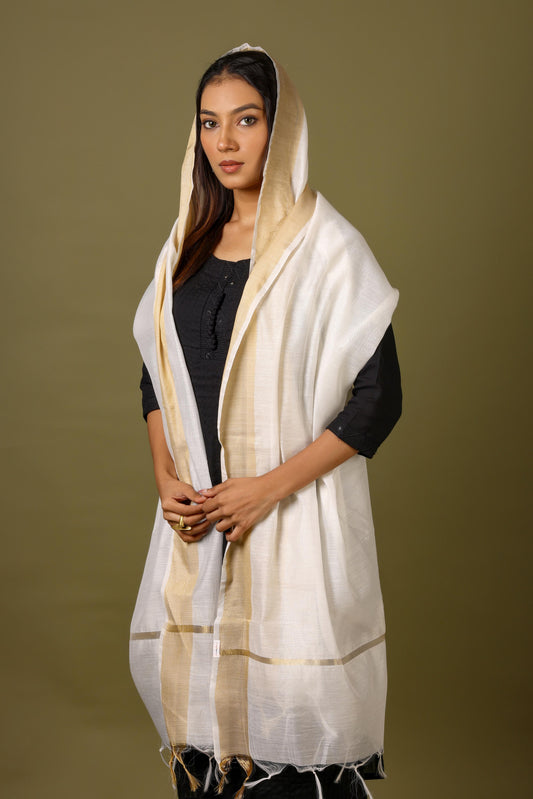
Neutrals and Everyday Elegance Pure White and Beige are the understated anchors of the collection. Pure White is a clean, fresh choice for daytime events, haldi and mehendi ceremonies, and spring functions. Beige is the warm neutral that pairs with almost every colour in a salwar kurta or suit without demanding coordination effort.

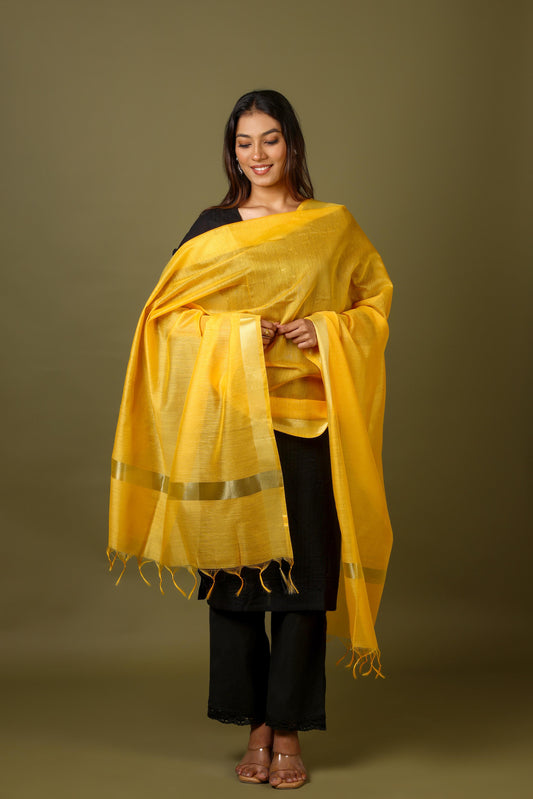
Warm and Celebratory Tones Sunshine Yellow brings the energy of celebrations and works beautifully at festive gatherings and daytime events. Coral sits between warm pink and orange and coordinates naturally with both ivory and deep base outfits. Hot Pink is the bold, unapologetic choice for anyone who wants the dupatta to be the defining element of their look.

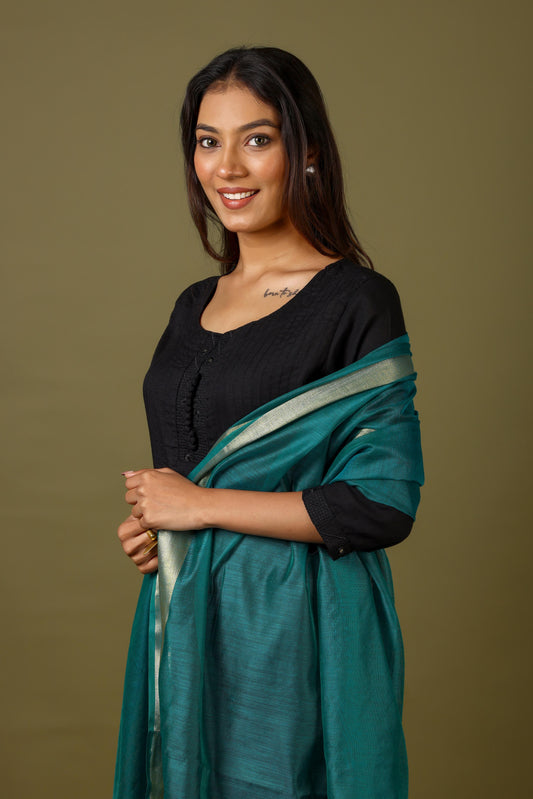
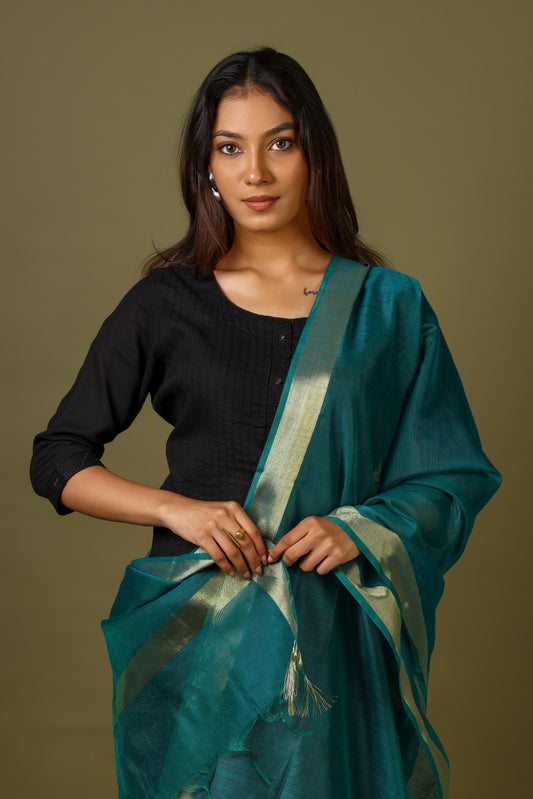
Deep and Sophisticated Shades Navy is the most formal shade in the collection. It works with formal ethnic wear, silk kurtas, and occasion suits where you want understated authority rather than visual noise. Peacock Green has a richness that photographs beautifully and carries well in large, well-lit spaces like wedding halls and reception venues.

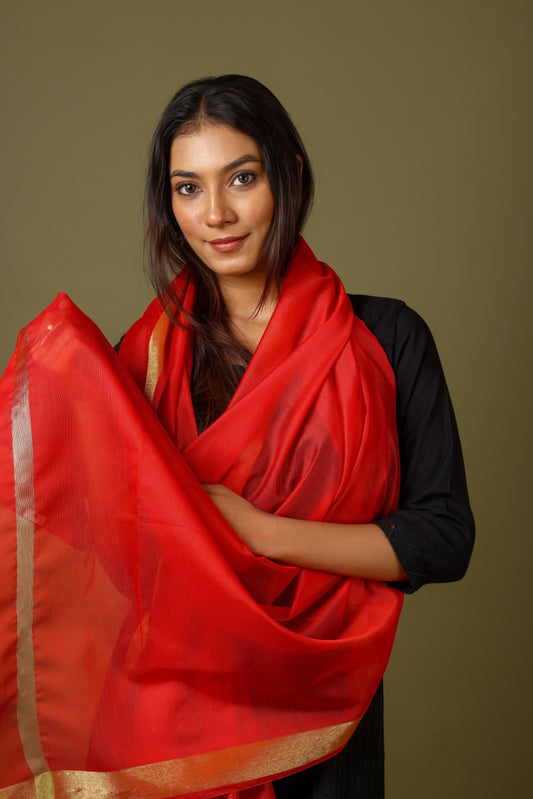
The Statement Colours Royal Red is currently sold out, which reflects how consistently popular deep red Chanderi dupattas are for weddings, pooja occasions, and festive functions. Firoza Turquoise Blue is the most visually distinctive piece in the collection, pairing the clarity of turquoise with the additional detail of a Paisley border rather than a plain golden one.

How to Style a Chanderi Dupatta for Women

Chanderi Silk drapes in a particular way. It has enough body to hold a clean line but enough lightness to flow naturally. That combination makes it adaptable across different styling approaches.

Pinned at one shoulder over a silk or cotton kurta, the golden border frames the neckline and draws attention to the upper body elegantly. Draped across both shoulders in a full dupatta drape over a churidar or Anarkali, it adds formality and occasion-worthy structure. For reception and evening wear, a dupatta in Navy, Hot Pink, or Peacock Green draped loosely over a designer suit creates the kind of finish that heavier fabrics tend to work against.

Because Chanderi is lightweight, it packs without significant creasing and recovers quickly once draped. It is a reliable travel companion for weddings and multi-day celebrations.

OMVAI's Approach to Chanderi: Craft That Respects the Fabric

OMVAI's selection of Chanderi Silk for this dupatta collection is not incidental. The brand works with fabrics that carry genuine heritage, and Chanderi is one of India's most significant textile traditions. The Golden Border collection respects that heritage by letting the fabric do what it does best, with the golden border as a considered enhancement rather than a distraction from the Chanderi base.

All dupattas in this collection are available with free shipping across India, COD on all orders, and express delivery for those who need fast turnaround before an upcoming event.

Shop all colours of the OMVAI Golden Border Chanderi Dupatta collection at omvai.in. Free shipping and COD available on every order across India.

FAQs

The golden border on these dupattas is woven using zari-style metallic thread, which is integrated directly into the fabric during weaving rather than applied as embroidery afterwards. A woven border is more durable than an embroidered or printed one because it is structurally part of the fabric itself. It does not peel away or separate with regular use and careful washing.
Chanderi is a GI-tagged (Geographical Indication) handloom fabric from Chanderi town in Madhya Pradesh, India. The fabric has been woven in this region for over six centuries and carries a protected designation that ensures only fabric produced authentically in the Chanderi region can use the name. Chanderi Silk is a blend of silk and cotton yarns that gives the fabric its characteristic natural sheen, lightweight structure, and gentle crispness.
Yes. Chanderi Silk is one of the most traditional and respected festive fabrics in Indian ethnic wear. The natural silk sheen, the golden border, and the clean drape of this collection make these dupattas particularly well suited for weddings, receptions, pooja ceremonies, Diwali, Eid, and any occasion where you want a dupatta for women that reads as elegant and occasion-appropriate without being heavy or uncomfortable.
Dry cleaning is the safest option for Chanderi Silk to preserve the fabric's sheen, structure, and the integrity of the golden border. If hand washing is preferred, use cold water and a very mild detergent for delicates. Do not wring or twist the fabric. Rinse gently, press out excess water by laying the dupatta flat on a towel, and dry in shade. Iron on low heat from the reverse side while slightly damp. Avoid soaking for extended periods.