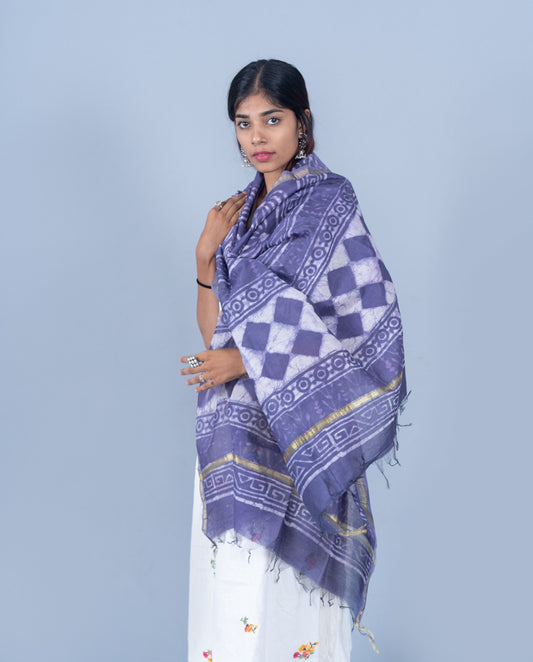
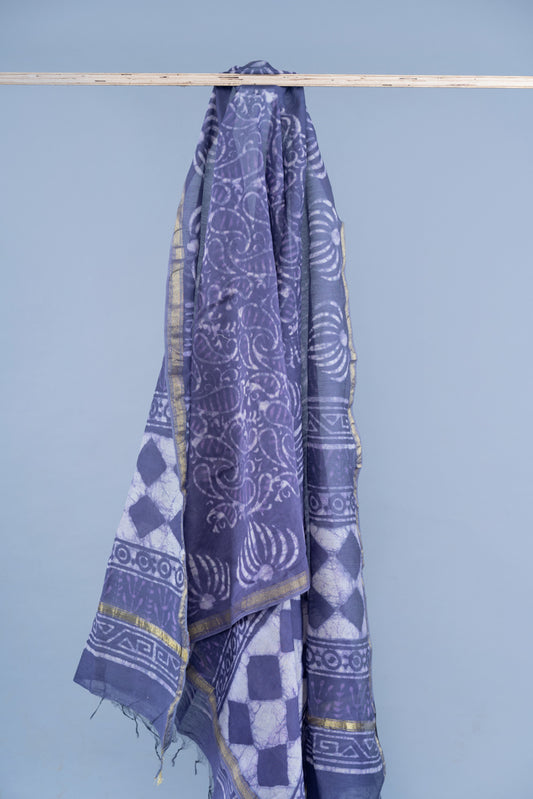
Collection: Hand Block Printed Chanderi Silk Dupatta

9 products

Collapsible content

Hand Block Printed Chanderi Silk Dupatta

A Chanderi Dupatta That Wears the Mark of a Craftsperson's Hand

There are two ways to put a design onto fabric. You can print it by machine in seconds, or you can press a hand-carved wooden block into dye, align it by eye, and stamp it by hand, one repeat at a time. The second way takes considerably longer. It also produces something that the first method simply cannot.

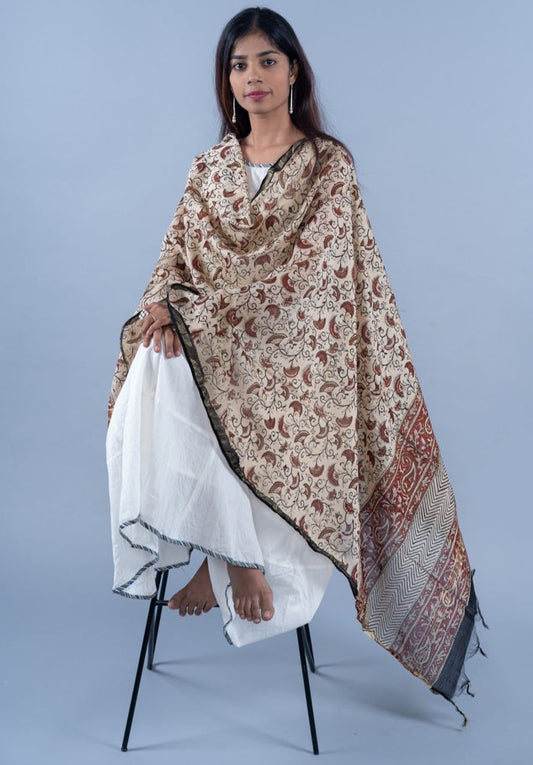
OMVAI's Hand Block Printed Chanderi Silk Dupatta collection is built entirely around that second approach. All dupattas here are hand block printed on authentic Chanderi Silk, each one carrying a print tradition with real depth, whether that is the flowing geometry of a Phool Jaali, the repeating vine movement of a Patti Bel, or the classical individual motifs of a Paisley Buta. Every single piece in this collection is currently in stock and available for immediate dispatch.

If you have been looking for a chanderi dupatta for women that brings both the fabric and the printed surface to the same standard of quality, this collection delivers exactly that.

What Hand Block Printing on Chanderi Silk Actually Means

Hand block printing is one of India's oldest surface decoration techniques. A design is carved in relief onto a block of teak or sheesham wood. The block is pressed into natural or colour-fast dye and then stamped onto the fabric with controlled pressure and careful alignment. Each repeat of the pattern is done individually, by hand, which means the printer is making hundreds of placement decisions across the full length of a dupatta.

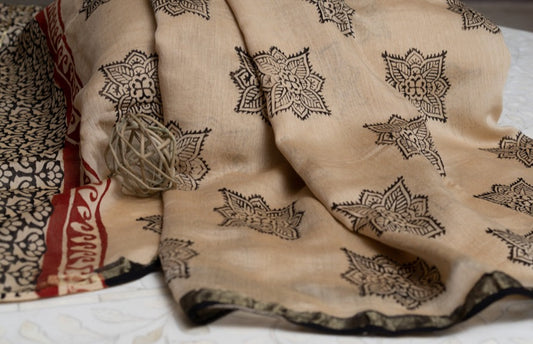
Printing on Chanderi Silk adds a layer of technical complexity. Chanderi has a semi-transparent, slightly crisp weave structure. Too much pressure and the dye bleeds through the open weave. Too little and the print is faint. The printer calibrates for the specific fabric with every block placement. The result is a print that has texture and depth, a slight impression in the fibres where the block made contact, which you simply do not get from screen printing or digital printing on the same fabric.

This is what separates a genuinely hand block printed chanderi dupatta from the printed alternatives that use the same fabric name while cutting production corners. The difference is visible in the finished piece and more noticeable the longer you wear it.

Three Print Traditions Across All Dupattas

The dupatta for women in this collection are organised across three distinct design families, each rooted in a different Indian printing tradition.

The Phool Jaali and The Princess: Handloom with Zari Border

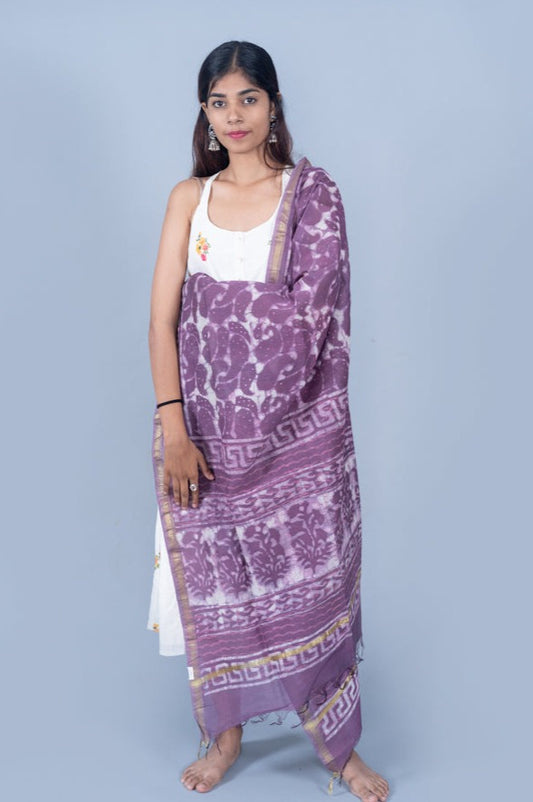
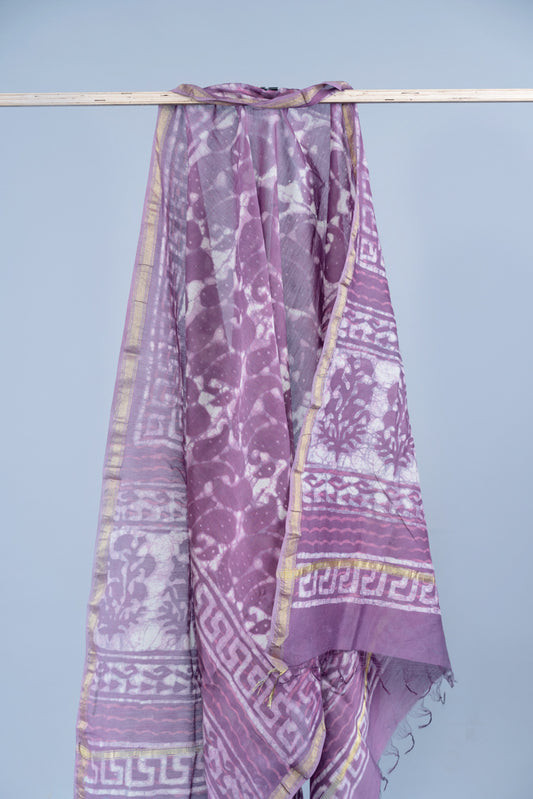
Two pieces in this collection stand apart from the others. The Phool Jaali and The Princess are handloom Chanderi Silk dupattas with woven Zari borders, combined with hand block printed surfaces. Phool Jaali translates as floral lattice, a continuous interlocking network of floral forms that covers the full surface of the dupatta. The Princess is a named design that carries its own distinct pattern identity, making it a piece that is immediately recognisable when worn.

The combination of handloom Chanderi base, hand block print, and woven Zari border makes these the most craft-intensive pieces here and the strongest choice for festive dressing. The Phool Jaali has a 5.0 out of 5 rating from verified buyers.

Patti Bel: Leaf Vine Running Pattern

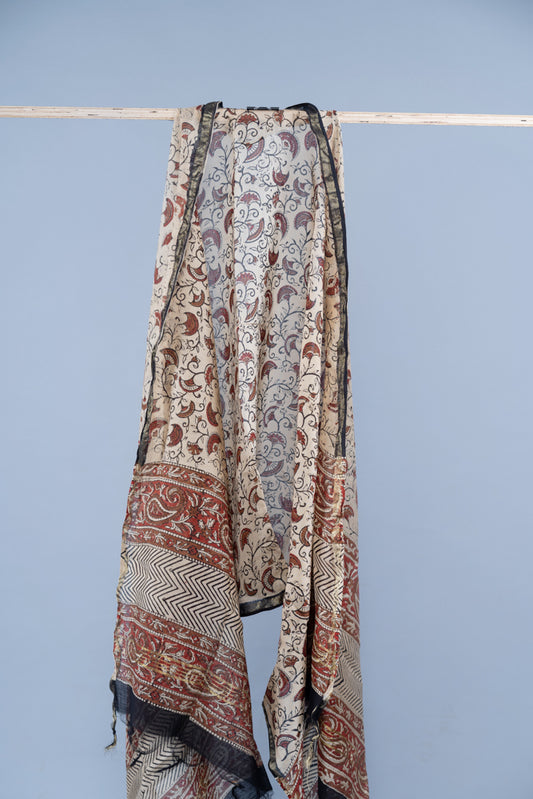
Patti means leaf or stripe. Bel means vine or creeper. A Patti Bel design is a running botanical pattern where a continuous vine trails along the fabric in a diagonal or flowing line. On Chanderi Silk, this kind of movement-based print works beautifully because the fabric drapes in a way that keeps the vine pattern in motion as you wear the dupatta.

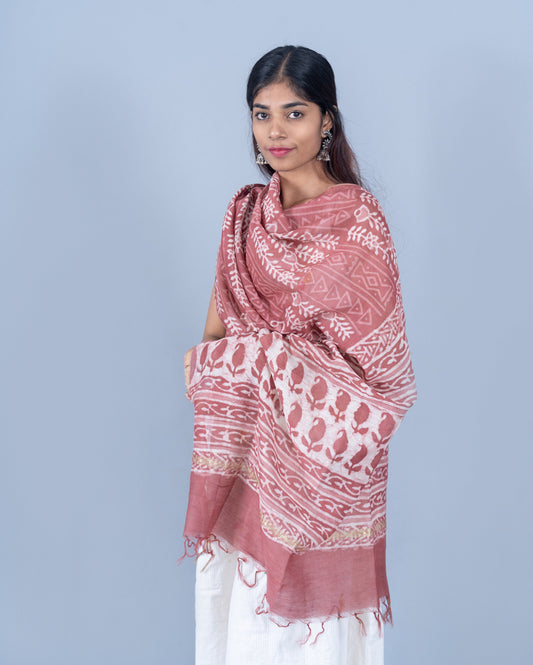
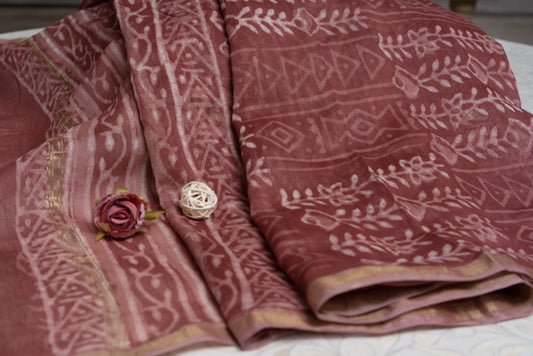
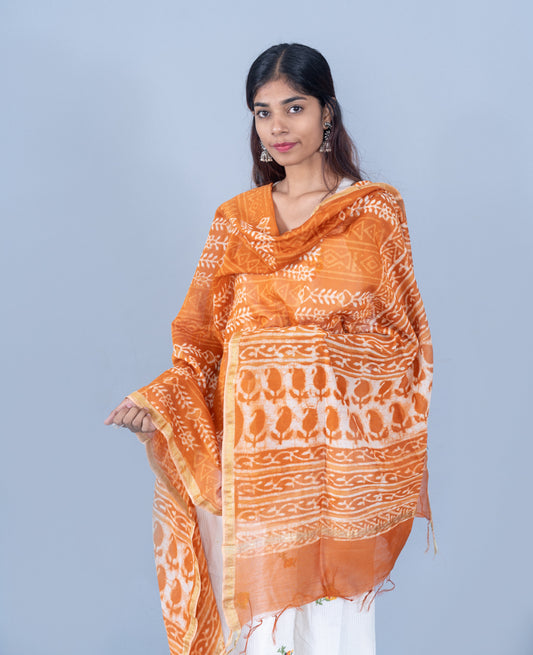
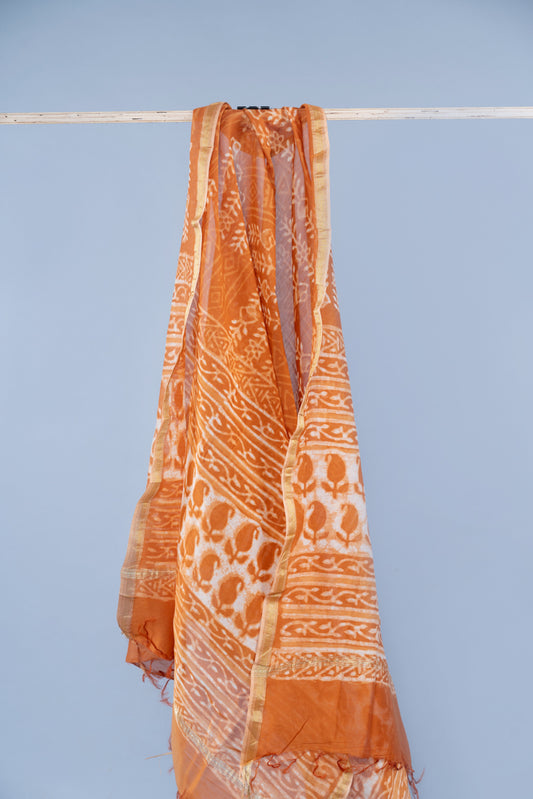
The Mauve is the quietest and most versatile of the three. Tangerine Orange is the boldest and works particularly well against cream, ivory, and white base outfits. Green is a fresh, considered choice that coordinates naturally with earthy and neutral tones.

Paisley Buta: Individual Motif Arrangement

Paisley is one of the most globally recognised motifs in Indian textile design, a teardrop-shaped form with a curved tip that has appeared in Mughal-era textiles, Kashmiri shawls, and Indian handblock printing for centuries. A Buta arrangement means these motifs are placed individually at regular intervals across the fabric, allowing the Chanderi base to show between each one.

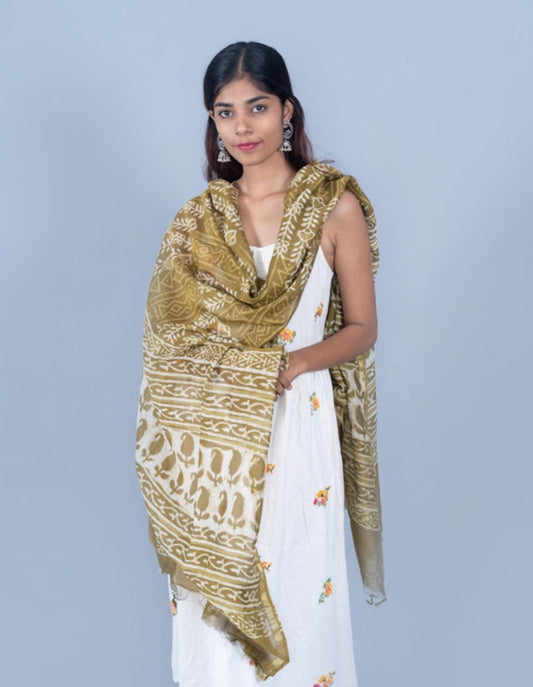
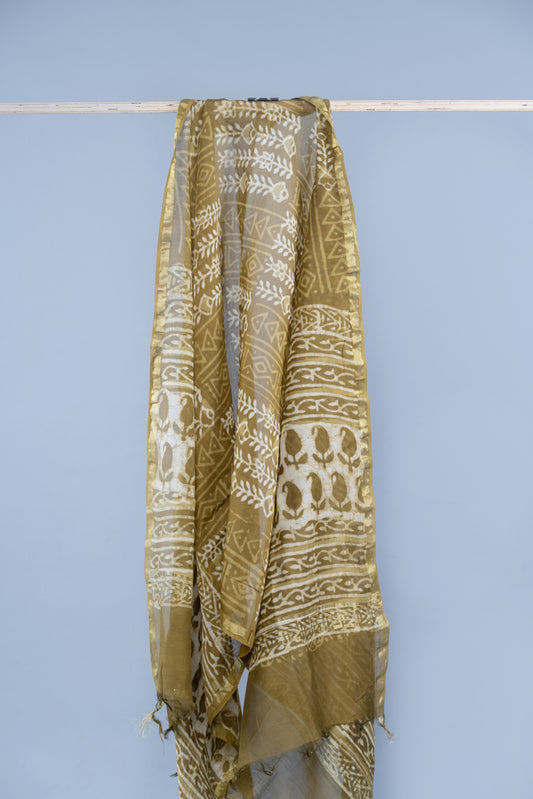
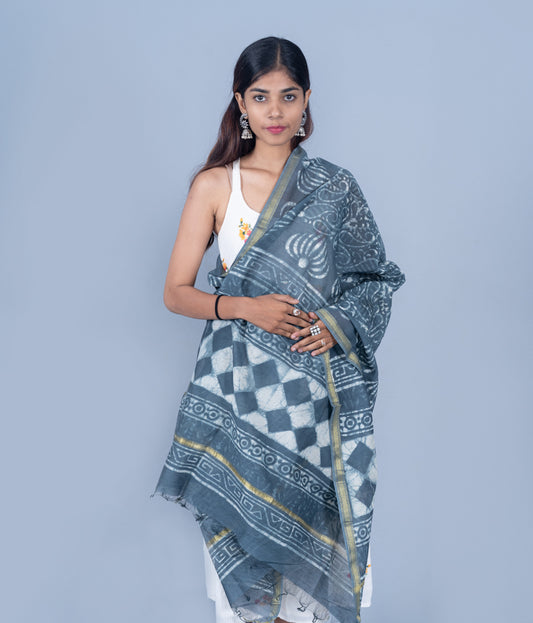
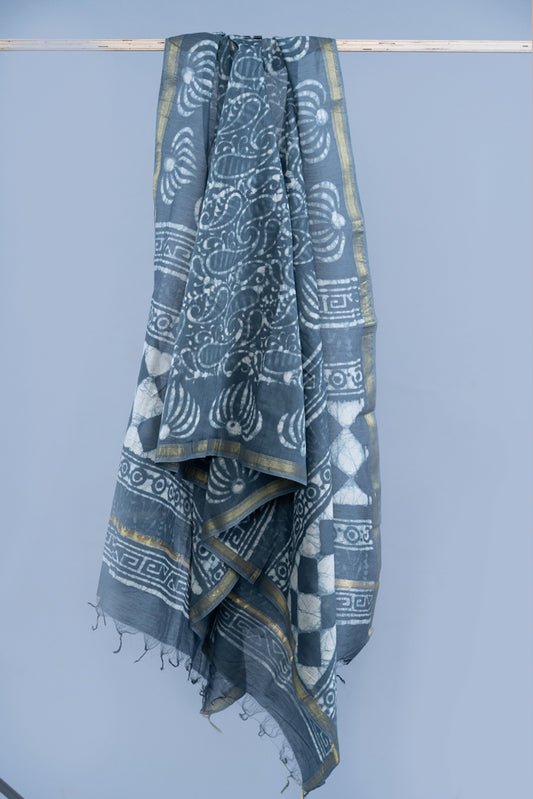
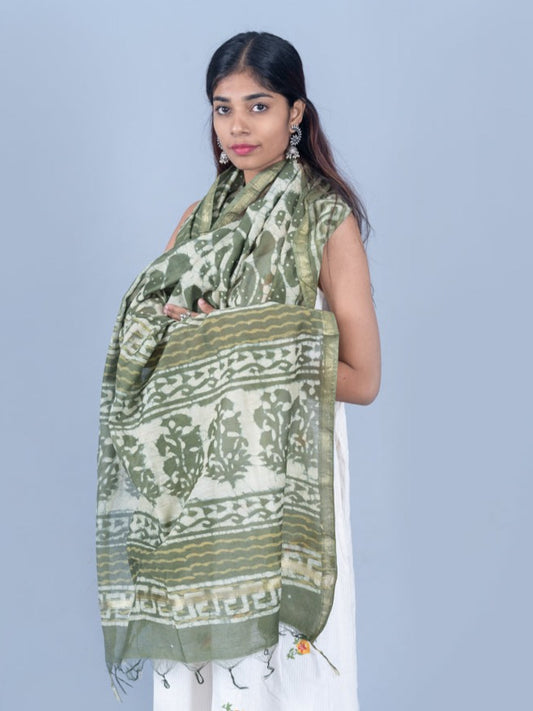
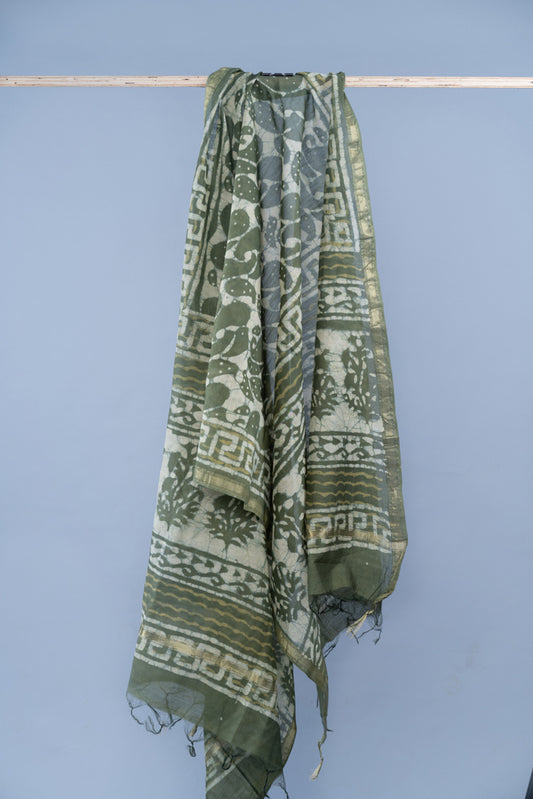
OMVAI offers four Paisley Buta dupattas in this collection: Purple Passion, Charcoal, Olive Green, and Blue. The Charcoal is the most formal and works with the widest range of outfit colours. The Purple Passion is the most festive. Olive Green is the most distinctive choice in the range, an earthy, unusual colour that pairs beautifully with cream, mustard, and rust outfits. Blue is the most everyday-versatile.

How to Decide Which Design Is Right for You

The three design families in this collection suit different styling instincts and occasions. A few direct suggestions:

If you want a dupatta that makes a clear visual statement and is immediately recognised as special, choose The Phool Jaali or The Princess from the Zari border series. If you want movement and botanical richness in the print, choose a Patti Bel. If you prefer a pattern that is classical without being heavy, choose a Paisley Buta. In terms of colour, Charcoal and Mauve are the most flexible across outfit types. Orange, Purple Passion, and Olive Green are the choices when you want the dupatta to be the centrepiece of the look.

How to Style a Hand Block Printed Chanderi Dupatta for Women

Chanderi Silk has a natural drape that displays printed surfaces beautifully. Because the fabric is semi-transparent, the print reads differently in different lights, richer in shade, more delicate in natural daylight. A few styling approaches that work consistently well with these pieces:

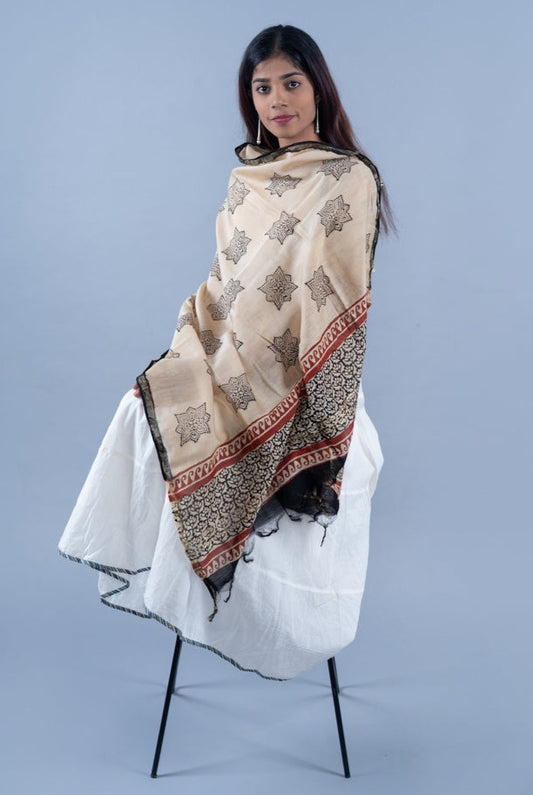
Draped fully over both shoulders with a plain cotton or silk kurta, the full width of the print shows clearly, which is the best way to appreciate a Phool Jaali or Paisley Buta pattern. Pinned at one shoulder and left to fall loose on the other side, it adds colour and movement to a formal occasion suit. Used as a light wrap around the neck over western clothing, a Patti Bel or Paisley Buta dupatta adds a distinctly Indian textile element to a contemporary outfit without looking forced.

The Whole Dupattas Collection Is Available Right Now

Unlike many handcrafted collections where popular pieces sell out and restock slowly, all dupatta for women in this collection are currently in stock with no waitlist. Shop the hand block printed chanderi dupattas at OMVAI. Free shipping across India, COD available on all orders, and express delivery for those who need their dupatta before an upcoming event.

FAQs

Hand block printing is a traditional Indian surface decoration technique where a design is carved into a wooden block, dipped in dye, and stamped onto fabric by hand. Each repeat of the pattern is placed individually, which means the print has slight natural variation across the fabric surface. Screen printing and digital printing are machine-assisted processes that produce perfectly uniform repeats at much higher speed. On Chanderi Silk specifically, hand block printing creates a softer impression with greater depth because the dye is absorbed into the fabric weave rather than sitting on top of it.
The collection includes three distinct design types. Phool Jaali and The Princess are handloom Chanderi pieces with woven Zari borders and hand block printed surfaces. Patti Bel is a running vine or leaf pattern available in Mauve, Tangerine Orange, and Green. Paisley Buta features individually placed paisley motifs available in Purple Passion, Charcoal, Olive Green, and Blue.
Yes. Chanderi is a GI-tagged (Geographical Indication) fabric from Chanderi town in Madhya Pradesh. The fabric has been handwoven in this region for over six centuries and carries a protected designation. Chanderi Silk is made by interlacing silk and cotton yarns on a handloom, giving it a characteristic natural sheen, lightweight structure, and semi-transparent quality that makes it particularly well suited to surface decoration techniques like hand block printing.
The Charcoal Paisley Buta and the Mauve Patti Bel are the most versatile for everyday use. Both have understated base colours that coordinate with a wide range of outfit tones, and the hand block printed motifs add visual interest without requiring a specific colour pairing. For festive or special occasions, The Phool Jaali or the Purple Passion Paisley Buta are the stronger choices.
Dry cleaning is the safest option to preserve both the Chanderi Silk base and the hand block printed surface. If hand washing, use cold water with a very mild detergent for delicates. Avoid soaking, wringing, or rubbing the printed sections. Dry flat in shade away from direct sunlight, which can fade natural dyes over time. Iron on the lowest heat setting from the reverse side while the fabric is slightly damp.